Monday, 4 January 2010

Treachery on the Titanic!


Just when it was thought safe to sail on the sea.....
...it would seem that there could be Treachery on the Titanic!
Will you be one of the lucky survivors on the lifeboat, or will you go down with the ship?
Before you start you need to print out your boarding pass. As you speed towards New York complete the questions by using the information given or by following the links provided.

You will need the answers to complete your quest. This will decide if you live or die.
At the same time you will find out much more about what really happened on that fateful trip…
All links open in a new window so that you do not lose your place in the game.
To start the game go to
Treachery on the Titanic!!!

Wednesday, 30 December 2009

Where are they now?


Names on the memorial plaque in the top hall.

Here are some of the names of Farmer Road boys who died in the Great War.

ALGER George; BEVAN Lawrence Edward; BOLAM Stanley; BULTITUDE William Thomas; BREEDEN H C; CAMPLING Albert; CORBLE Albert Arthur; CORNWELL John Travers (VC); CROUCHER Alfred Horace; CHILDS William Charles; DODKIN RWG; FITZGERALD Leonard William; ISEARD Harry; LORING S T; MATTHEWS E O J; PERRY G A; PLEASANTS Arthur Joseph; STEVENS R R; STURMAN Stanley Arthur Bertram; PARTINGTON Reginald Charles; PARTINGTON Frederick James
What happened to them? How did they die? Where are they buried?
You can find out about them at

Choose one name and start searching.

In most cases you will find where they are buried, where in Leyton they lived, where and when they died, their age of death and what regiment of the armed forces they belonged to.
Click on Search Records.

Enter details like this:

Surname: the name in capitals on the list
Initials: the first initial
War: World War 1
Year of Death: from 1914 to 1918
Force: unknown
Nationality: United Kingdom


Post your comments in answer to these and other questions:

  • What did you find out about these young men? How and where did they die? Where in the world are they buried?
  • Did any of these young men live near where you live now? (perhaps you could remember them when you next walk past their houses, if they still exist….)
  • Did the information suggest any special stories? Which family had a double blow in 1918 and why are the bodies not buried?
  • There are other names on the plaque. Try JOHNSON A, JACKSON H and SMITH A. Why is it hard to find these three ex-Farmer Road pupils?
  • The name CLEVELAND R is on the plaque and there are two entries on the website. The same is true for PORTWAY C. In each case, why can we not be sure which is the Farmer Road pupil?

LOCATIONS OF THE CEMETERIES:

France: VILLERS-BRETONNEUX, BAILLEUL, THIEPVAL (Somme), PONT-DU-HEM, ARRAS, ENGLEBELMER, ETAPLES, LOOS, GROVE TOWN (Somme), CAMBRAI
Belgium: YPRES (MENIN GATE), NIEUWKERKE,
Egypt: ALEXANDRIA, ISMAILIA, GAZA
United Kingdom: MANOR PARK, CHATHAM

Saturday, 1 November 2008

Design a memorial

The Mayor of London has given his support to a memorial statue in London commemorating resistance to slavery and the abolition of the transatlantic trade in enslaved Africans.
Your FLO task is to design a memorial for the slave trade. It could be a statue but it doesn't have to be: there are memorial prizes, concerts, gardens, scholarships and buildings...

It should be a memorial to the people who struggled against the trade in enslaved Africans. They included:

  • enslaved people who resisted actively or passively
  • leaders who organised revolts
  • black and white campaigners against the slave trade
  • MPs who argued against the slave trade
  • the huge numbers of people who signed petitions

If you want to explore the stories and issues more fully online you can visit here or here or here (ignore the tasks, just look at the links).

To help you think....
Here are some examples of different memorials:


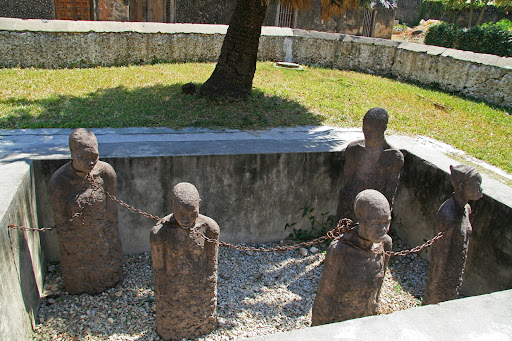
Here are some memorials to the slave trade in Africa and the Caribbean:


Here is a model of the memorial planned for London:


Can you do better?


Monday, 6 October 2008

Did Hadrian care about his people?

Complete the survey here.


The biggest military power in the 21st century is the USA .
"When the USA sneezes the whole world catches cold." These words were used 80 years ago but apply today to economic crises and wars.
President Bush faces many problems in 2008: the economy, foreign wars, security and his own image. His successor will face the same problems.
The biggest military power in the 2nd century was the Roman Empire which stretched across three continents.
The Emperor Hadrian faced many problems in the year 117: the economy, foreign wars, security and his own image. Perhaps not much has changed....

How did Hadrian tackle these problems?

Our big question is:

Was Hadrian interested in making life better for his people?

YOUR TASK:

Hadrian wanted to improve his people’s lives
Hadrian wanted to defend his empire from enemies
Hadrian wanted to be popular with his people
Hadrian wanted to show everyone that he was in charge

Do you agree with all of these statements? Some of them? None of them? What's your evidence?
Create a PowerPoint presentation to show your views.

WHERE TO GET INFORMATION etc

Watch the online videos:
(Don't worry if you don't have speakers or headphones: there are subtitles!)

Use information from the resource sheets.
Use images from the image slide show.
You can also look at an example of how to lay out your presentation.

Friday, 29 August 2008

Across the Atlantic

In the 15th century there were important civilisations and empires on both sides of the Atlantic.


In West Africa, the powerful kingdom of Benin.

In North Africa, the Muslim Empire of Songhay (or Songhai).


In Central America, the Aztec Empire.


In the South American Andes mountains, the Incas.

Your task is to find out about these four kingdoms. Visit the websites and find our about the way people lived, what they ate, how they dressed, their beliefs, their warfare...

Then choose two objects from each society. They could be buildings, weapons, jewellery, statues, pots, clothing.... They must be objects that represent the society and people they came from.

Copy each object onto a PowerPoint slide and write on the slide why you chose that object and what it teaches us about the society it came from. Add some relevant and interesting information that you have discovered.

Remember to save the Powerpoint as you go along... Call it 'Across the Atlantic' followed by your name.

LINKS:
Benin:
http://www.bbc.co.uk/worldservice/specials/1624_story_of_africa/page86.shtml

Thursday, 28 August 2008

THE SLAVE TRADE: topics

Choose one of these sections.


A. IDENTITY.
How do Black people of African descent see themselves and how are they seen?
Has this been affected by the legacy of slavery?
Where did racist stereotypes come from?

B. HERITAGE.
Does knowing about slavery change how we see Britain and being British?
Is there guilt or blame? Should there be?
How should we remember unpleasant and difficult stories?

C. ROUTES.
How did slavery impact on language and culture in Britain and the Americas?
What part has been played by music, art, film and popular culture?
How and why did enslaved people hold on to their own traditions?

D. ACTIVISM.

What was it like being an activist during the fight against slavery and what does it mean today?
How effective was the anti-slavery campaign and what was its impact on other protests?
What similar campaigns exist or are needed today?